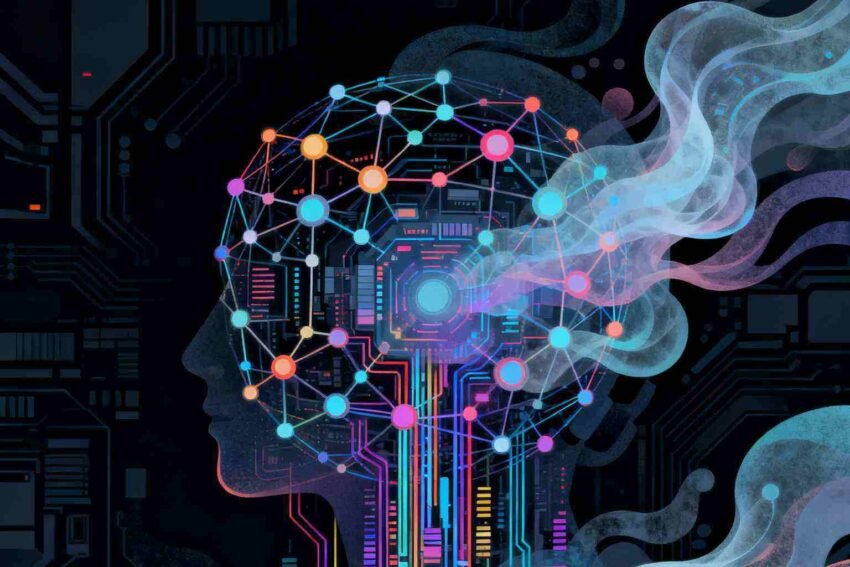
People warehoused and organized knowledge manually for centuries in books, libraries and databases. Artificial intelligence is now upending that. Robo systems extract patterns from massive data sets and make discoveries autonomously, without human assistance.
These systems do not merely crunch numbers, but create structured understandings across disparate fields. In their endless reading and connecting information, they just might determine the future of knowledge.
1. What Are Machine-Generated Knowledge Systems
Computer generated knowledge systems apply artificial intelligence, natural language processing and data analytics to extract insights from raw data. Rather than relying on human researchers to curate knowledge, AI systems infer relationships and construct organized knowledge bases.
They convert raw data into actionable intelligence.
2. From Data to Knowledge
Data alone has limited value. Data becomes meaningful relationships in knowledge systems. For instance, AI can link scientific studies, tease out trends and compile overviews across thousands of documents.
This accelerates discovery and decision-making.
3. Role of Knowledge Graphs
Knowledge graphs are at the heart of machine- knowledge. They are used to represent relations between entities, such as:
- people
- location
- concept
- event
AI systems build knowledge graphs by connecting bits of information.
This organization better corresponds to search and reasoning.
4. Applications in Research and Education
Machine-generated systems are used by researchers to scan academic papers and identify nascent trends. Personalized learning paths can be formed by educational institutions by knowledge mapping.
Automation promotes more rapid learning and innovation.
5. Benefits of Automated Knowledge Creation
Machine-generated systems offer several advantages:
- Rapid processing of large datasets
- Continuous updating of information
- Reduced manual effort
- Discovery of hidden patterns
- Enhanced decision support
These benefits establish their diverse value across sectors.
6. Impact on Business Intelligence
Organizations employ knowledge systems based on AI to examine trends in the market, customer behavior and data related to their operations. No more just reporting from only a set of static reports, now with dynamic insights on your business.
Real-time intelligence improves strategy.
7. Challenges of Accuracy and Bias
Despite progress, challenges remain:
- Risk of incorrect data interpretation
- Bias inherited from training data
- Over-reliance on automated summaries
- Lack of transparency in algorithms
- Difficulty validating generated insights
Human oversight remains important.
8. Ethical and Governance Considerations
But as machines generate knowledge, questions arise about accountability and validation. Systems need to be trustworthy, and misinformation must be deterred. Clear governance standards are necessary.
Trust is key in knowledge systems.
9. Collaboration Between Humans and AI
Knowledge generated by machine does not substitute humans. Instead, it augments it. Machines are good at sifting vast stores of data rapidly; humans provide context, judgment and ethical scrutiny.
This collaboration creates balanced intelligence.
10. Future Intelligent Knowledge Ecosystems And The
Knowledge systems of the future might automatically update themselves and adapt according to context. Paired with real time streams of data, they could accelerate scientific inquiry, policy analysis and innovation to breakneck speeds.
Machine generated knowledge systems: Towards a time centric multi-agent knowledge repository 209 network, from static databases of information to dynamic distributed intelligence networks. The manner in which mankind evolves knowledge and how it is manifested through the ages will remain ever changing as technology progresses.
Key Takeaways
- AI is also used to convert data into structured knowledge in machine-generated knowledge systems
- They are valuable tools for research, business intelligence and decision support but must receive appropriate supervision to maintain accuracy and fairness
- The future of knowledge is human-AI partnership
FAQs:
Q1. How do you define machine forest of knowledge?
It’s an AI-engine that turns unstructured data into structured insights.
Q2. What do knowledge graphs offer these systems?
To that end, they model relationships of entities to better comprehend.
Q3. Are machine-generated insights always accurate?
no, you need humans to resolve ambiguity Award me.
Q4. In which areas are these systems being used?
In science, education, analytics and business intelligence.
Q5. Will AI replace human researchers?
AI aids the research process, but does not replace, entirely, human judgment.